
How Household Chemicals Affect Health and How to Choose Safe Products for Your Home
Content
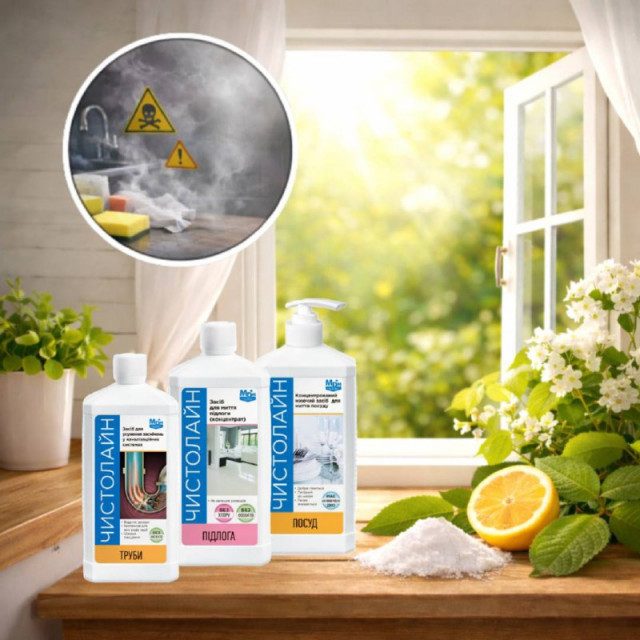
Keeping a home clean has long been an essential part of our everyday routine. However, not everyone thinks about the fact that the effectiveness of household chemicals is only one side of the coin. It is equally important to understand how the ingredients in detergents and cleaners affect human health, and what distinguishes truly high-quality products. Below, we take a closer look at the impact of household chemicals on health and explain how to choose safer products for home use.
This material was prepared with the participation of an MDM Group chemical technologist who specializes in developing safe cleaning solutions and quality control for household chemicals.
Important: This article is for informational purposes only. If you experience pronounced irritation symptoms or allergies, it is best to seek medical advice.
Why Cheap Household Chemicals Can Be Harmful
When discussing why inexpensive cleaning products can be dangerous, it is important to remember that low-cost items are often made using simplified formulas, where manufacturers save on the quality of raw materials, the concentration of active substances, and purification systems. As a result, the product may seem attractive in price but may not undergo rigorous testing, leaving traces of potentially harmful components. Let’s look at the potential harm of cheap household chemicals in more detail.
Ingredients That May Be Harmful to Health
The main issue with low-cost products is the use of substances that—when present in incorrect concentrations or with insufficient purification—may negatively affect health. Such potentially hazardous components can cause unpleasant odors and lead to irritation of the skin and mucous membranes.
Below are ingredients you should treat with caution. Understanding their purpose makes it easier to read labels more consciously and choose safer products:
-
Harsh surfactants (anionic surfactants with a low level of purification).
-
Formaldehyde and its derivatives. Used as preservatives; in the EU, formaldehyde is classified under CLP as a hazardous substance at certain concentrations, so its presence and level require special control.
-
Phthalates. Used in fragrances; may cause allergic reactions.
-
High concentrations of chlorine. Effective against bacteria, but improper use can irritate the skin and mucous membranes. According to the WHO (World Health Organization), prolonged inhalation of chlorine vapors may contribute to chronic respiratory diseases.
-
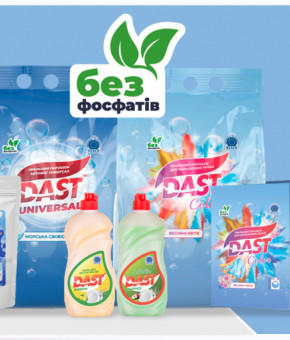
Phosphates. According to the EPA, they can intensify eutrophication in water bodies, so their content is regulated. In Ukraine, Cabinet of Ministers Resolution No. 575 (2021) introduced limits on phosphates and other phosphorus compounds in detergents; mandatory enforcement has been in effect since 2024 (previously, voluntary implementation was permitted).
It is the combination of such components in cheap formulas that increases the negative effect—especially with long-term use without proper ventilation.
How Household Chemicals Affect the Body
The impact of household chemicals on people depends on frequency of use, the concentration of active substances, and usage conditions.
In 2023, a study published in the journal Chemosphere tested 30 popular cleaning products and air fresheners in a laboratory chamber and measured which volatile organic compounds (VOCs) they released into the air. The authors quantitatively identified 530 different VOCs. Of these, 193 compounds were flagged as potentially hazardous based on the California DTSC Candidate Chemicals List and the European Chemicals Agency (ECHA) C&L Inventory.
On average, higher total emissions and a greater variety of VOCs were more often recorded for conventional products compared to fragrance-free options and products marketed as safer.
These findings indicate that lower-quality products often have a strong odor and higher volatility, which increases the likelihood of inhalation exposure.
With regular household use, this most commonly shows up as:
-
irritation of skin and mucous membranes — redness, dryness, itching;
-
signs of allergy — contact dermatitis, rashes, watery eyes, coughing;
-
increased strain on the airways, bronchi, and lungs;
-
heightened sensitivity in children and people with chronic respiratory conditions.
The effect of detergents on the skin and other organs does not necessarily cause an immediate reaction. Negative symptoms often develop gradually when a person regularly uses low-quality formulations.
How to Tell High-Quality Household Chemicals from Low-Quality Ones
In fact, you can often identify a questionable product even before purchase—simply by carefully checking the packaging and product information. Key warning signs include a lack of transparency and non-compliance with basic quality standards.
First, look at the label: if the ingredients are listed incompletely or described in vague terms, that is a reason to be cautious. According to recommendations from the Ministry of Health of Ukraine, when choosing household chemicals it is important to avoid products containing formaldehyde and phenols, as these substances are considered potentially hazardous with long-term exposure.
Second, the absence of certification information suggests the product may not have undergone laboratory testing, or the manufacturer may not be ready to confirm its safety. Other signs of poor quality include an overly sharp chemical smell, quick skin irritation during use, and an unstable consistency (separation, excessive foaming with a small amount).
It’s important to understand that a quality product is not necessarily “eco” household chemistry. Above all, it is a formulation that has been verified and meets modern safety requirements.
How to Choose a Safe Cleaning Product
Safe cleaning products are the key to a clean home without harming your health. To navigate a wide assortment, follow a few professional recommendations. These tips help even those who are not familiar with chemical formulas:
-
Study the ingredient list and look for clear explanations of active components. Quality manufacturers specify exact substances.
-
Pay attention to certificates. European or national standards confirm safety and effectiveness.
-
Choose products with a neutral scent or no fragrance at all, or with mild, safe fragrances—especially if you need hypoallergenic cleaners. Natural cleaning products should also be chlorine-free.
-
Prefer brands that do not cut corners on raw material purification.
-
Use the product strictly according to the instructions.
In MDM Group’s cleaning practice, new products are tested as part of internal quality control: specialists assess the formula’s effectiveness, pH balance, and potential impact on the skin.
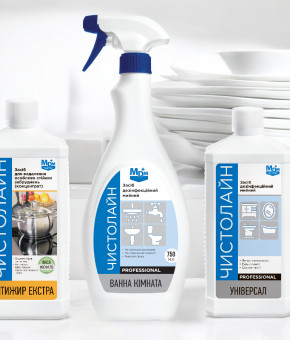
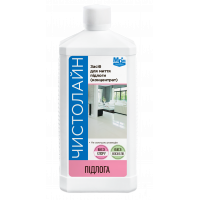
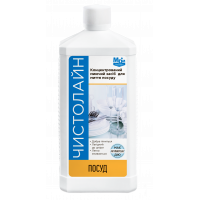
For example, professional products from the “Chistolain” line do not contain chlorine or phosphates, yet deliver the same level of cleanliness with lower consumption and remain safe for regular use.
Safe household chemicals help maintain cleanliness at home without unnecessary health risks.
An Example of High-Quality and Safe Household Chemicals: MDM Group Products
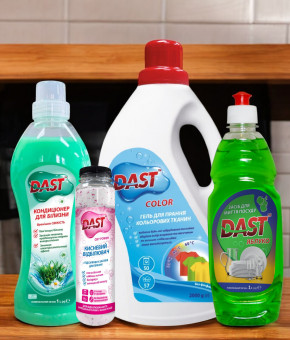
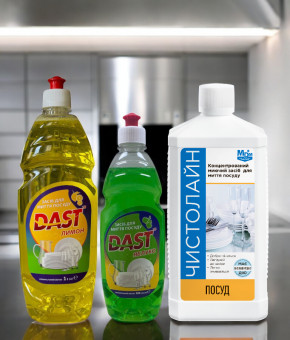
At MDM Group, we produce household chemicals for daily cleaning and for tackling tough dirt. We develop formulas for specific tasks and surface types, and before release we verify key parameters through internal quality control and laboratory tests.
If it is important for you to reduce the risk of irritation, choose products with transparent ingredients and clear usage recommendations. During cleaning, follow the dosage guidelines, use gloves, and ventilate the room.
MDM Group products are an example of what high-quality household chemicals should look like when a manufacturer truly cares about consumer safety and satisfaction: verified formulas, strict control, effective performance, and comfort in use.
MDM Group Expert Comment:
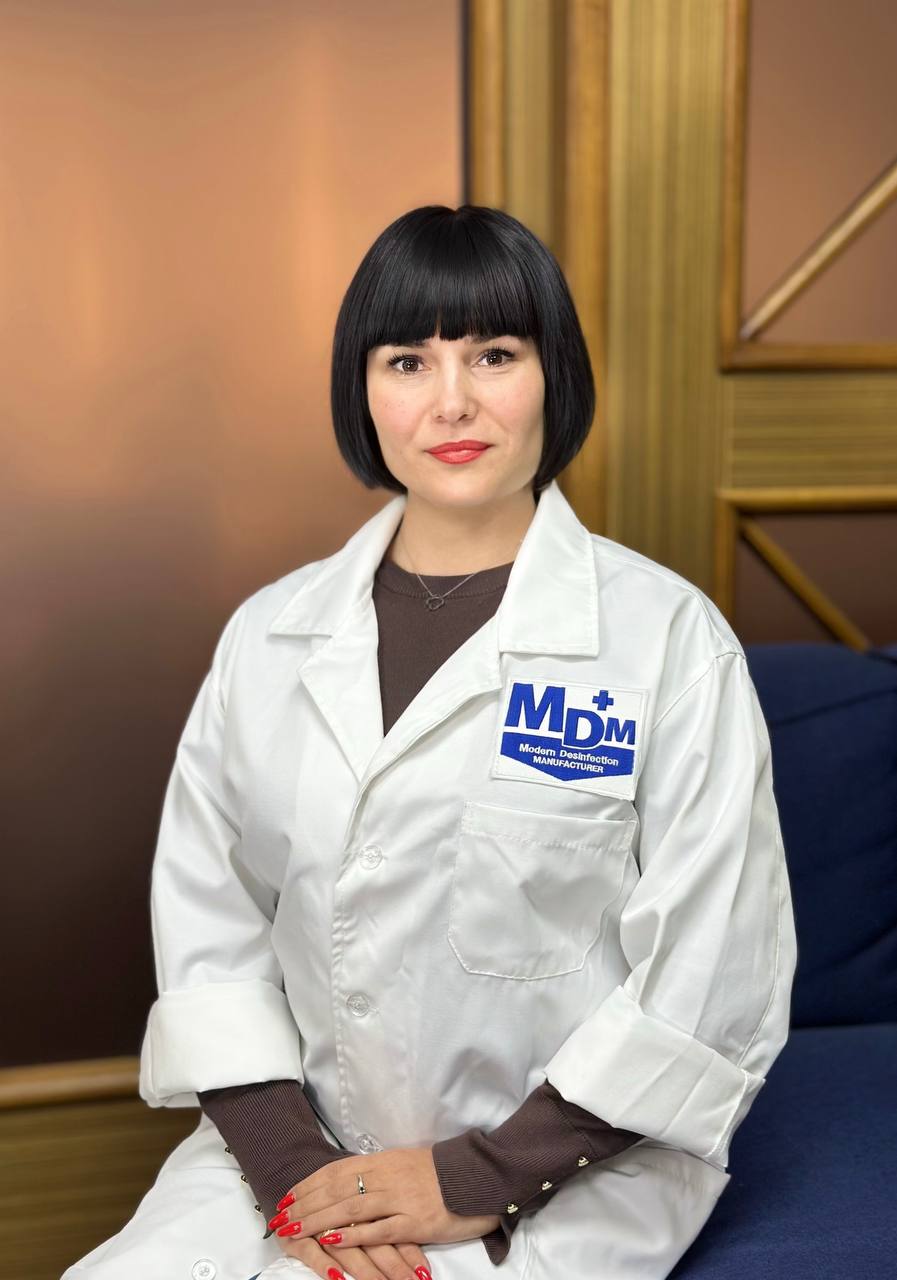
Household cleaning products can be both effective and safe—provided they have a transparent formula, appropriate concentrations, and verified quality. Choose products with clearly listed ingredients and certification, avoiding harsh low-purity surfactants, high concentrations of chlorine, and unregulated fragrances. At MDM Group, we ensure safety at every stage: we test raw materials and finished formulas and assess stability and pH balance so our products perform effectively without unnecessary risks to the skin and respiratory system.
Yana Holovenko, Head of Quality Department, MDM Group